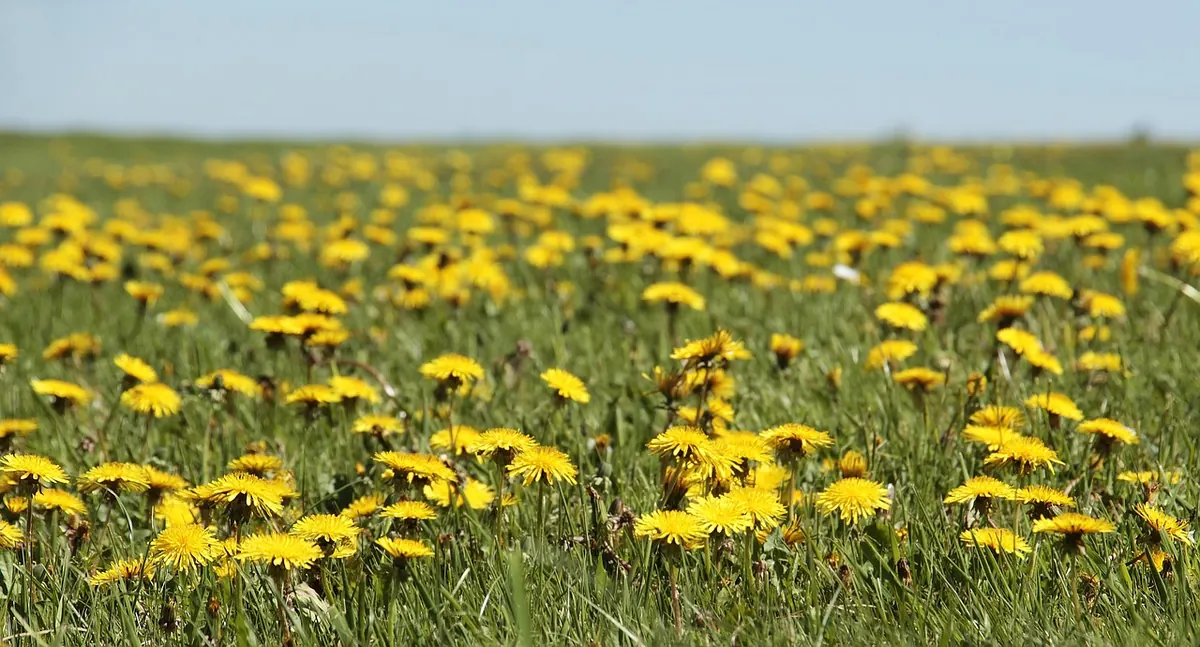
Open almost any troubadour songbook and the first thing you meet is weather. Leaves come out, birds tune up, meadows go green — and only then does the poet get round to the thing he actually wanted to sing about: a woman, a lord, a war, or his own ruinous mood. The habit is old enough to feel like a rule, and for two centuries of Occitan verse it practically was one.
Modern readers call it the spring opening. The Old French had a word for it, reverdie, and Occitan poets had a stock of phrases that did the same work: lo temps novel, la dolsa sazos, lo prim temps. Whatever the label, the effect is a door. The song starts outdoors, in the shared world, and walks you inward.
A canso was a song for performance, not a page. The opening stanza had several jobs at once: it announced that a song had begun, it set the emotional key the melody would carry, and it gave the singer a moment of plain, pleasurable description before the first difficult rhyme. Listeners in a patron's hall knew the code instantly. Birds meant the season had turned. The season turning meant a song was coming.
The device has deep roots. Latin poetry had long used the returning spring as an entry into love, farming and moral reflection, and the poets of the south had Andalusi and Arabic models close at hand. What the troubadours did was to make the opening their own by tightening it into a unit of two or three lines — no ornament for its own sake, just enough landscape to establish that the world is awake.
The earliest troubadour whose name we know, William IX of Aquitaine, sets the pattern so cleanly that it could serve as a definition:
Ab la dolchor del temps novel
foillan li bosc, e li aucel
chanton, chascus en lor lati —
With the sweetness of the new season, the woods leaf out and the birds sing, each in its own tongue.
Notice the detail: each bird sings in its own language. It is a lovely image and also a small piece of diplomacy, since the poet is about to ask for a hearing in his.
The calendar in these songs is deliberately loose. Temps novel can cover the general thaw; prim temps is early spring; May is the emblem and the shorthand. Jaufre Rudel opens one of the best-known songs with Lanquan li jorn son lonc en mai — when the days are long in May — and he is not being meteorological. He is naming the season of courtship.
That is the point of May. In medieval Europe it was the recognised month of wooing and of popular festivity, the month of green branches brought indoors and evenings spent out of doors, and poets used it as a shorthand for the moment when the world invites desire. It also solved a practical problem: a long day is a long song. The listener is placed at a specific hour as well as a specific month.
None of these songs is remembered for its landscape. The landscape is the setup; what the poet does with it is the poem.
The technical move in a spring opening is a turn. The first stanza is public and shared — the same spring everyone in the hall can see out of the same window. The second stanza is private. The hinge is often a small word: mas (but), per qu'ieu (and so I), or a question thrown at the audience.
Once the turn happens, the landscape can go two ways. It can mirror the lover: the world's joy confirms his own, and the song becomes celebration. Or it can mock him: everything blooms and he alone is barren, and the song becomes complaint. The second mode is usually the better poem, because the world's indifference gives the poet something solid to push against. A happy lover has very little to do; a miserable one has the whole of May to argue with.
The convention was sturdy enough to be broken on purpose. Marcabru, the sharp-tongued moralist, treats the easy pleasures of spring with suspicion and turns the pastoral scene into a lecture. In the pastourelle, the spring opening becomes a framing device for an encounter on a road rather than a meditation in a hall. And in the sirventes — the political and moral song — a poet could borrow a well-known tune and its seasonal opening, then use it for something the original melody never intended: a crusading appeal, a satire, a complaint about a stingy lord.
Even when the birds survive the borrowing, they often sound different. That is the sign of a living convention rather than a dead one.
Start with three songs: William IX for the template, Jaufre Rudel for the longing, Bernart de Ventadorn for the turn. Read the opening stanza twice — once for the weather, once for what it is preparing. Facsimile and facing-translation editions of the Occitan texts are widely available, and the language rewards patience; even a little of the original shows you how few words the troubadours needed to bring a wood into leaf.
And if you write songs yourself, the old rule still holds. Borrowing the season means nothing on its own. If you open with weather, the weather has to earn its place by the second stanza — otherwise you have a description where you needed a doorway.
Photo: pixel2013 / Pixabay

When the Albigensian Crusade broke the small courts of Languedoc, troubadours lost their audiences, their patrons...

A practical packing checklist for medieval music festivals, covering instruments, repair kits, layered clothing,...
Seven towns and ruins in southern France where troubadour history actually happened, from Ventadour's castle to...

Daily songs and stories from a troubadour.
