
When a crusader army reached the walls of Béziers in July 1209, it did not arrive to argue. The town was stormed within days, the population killed or scattered, and the campaign that followed would grind through Languedoc for two decades. The troubadours of Occitania were not the declared target. They were simply standing in the room when the music stopped.
To understand what happened to troubadour song, you have to understand what happened to the households that paid for it. The Albigensian Crusade is usually told as a war against heresy — the Cathars, a dualist movement rooted in the towns of the south. It was that. It was also a land grab, a papal project that handed Occitan fiefs to northern lords, and, for the poets, the slow dismantling of the only professional world they had.
The troubadours were not free spirits drifting from tavern to tavern. Most were attached to courts, sometimes as knights and courtiers, sometimes as trained professionals who worked a circuit of noble households with a joglar or two at their side. A song needed a room, a lord with money and appetite, and enough peace for a poet to travel between one castle and the next.
Occitan — the langue d'oc — was the medium. From the time of William IX, Duke of Aquitaine, the first-known troubadour, through the later twelfth century, the southern courts of Aquitaine, Ventadorn, Toulouse, Foix, Comminges and Provence produced and consumed a refined lyric art that expected its listeners to appreciate fin'amor, subtle argument, wordplay and a good tune. The Counts of Toulouse and Foix were not merely tolerant of poetry; they were, in effect, its payroll department.
That is why a war aimed at towns can devastate a literature.
Pope Innocent III called the crusade in 1208, after the murder of his legate, Peter of Castelnau. The army that assembled in 1209 came from the north of France, and after the sack of Béziers and the surrender of Carcassonne it fell under the command of Simon de Montfort, who would spend the next decade taking castles and lands that changed hands permanently.
Chroniclers writing later famously attributed to the papal legate a line about killing everyone and letting God sort them out. Whatever was said at the walls, the sequence of events is clear: towns burned, lords deposed, and a network of courts that had been mutually supportive suddenly competing for survival. Raymond VI of Toulouse, forced to do public penance at Saint-Gilles in 1209, was excommunicated more than once and never again fully trusted by either side.
The turning point came on 12 September 1213 at Muret. Peter II of Aragon — a king with real interest in southern affairs and no small taste for the prestige of troubadour poetry — was killed in the fighting, and the coalition behind Raymond VI collapsed with him. Simon de Montfort's dominance followed, though it was interrupted by his own death beneath the walls of Toulouse in June 1218.
Peace, when it finally arrived, was not a restoration. The campaign of Louis VIII in 1226 was followed by the Treaty of Paris in 1229, under which Raymond VII of Toulouse did penance at Notre-Dame and agreed to marry his daughter Joan to the King's brother, Alphonse of Poitiers. The arrangement quietly transferred Languedoc to the French crown, which took possession in 1271. By 1233 the papal Inquisition had been formally established at Toulouse.
What the poets lost, in practical terms, was this:
Some stayed and adapted. Guillem de Montanhagol, working out of Toulouse in the decades after the treaty, wrote songs that grind with resentment against the clerics and the French. Peire Cardenas, likely the sharpest moralist of the whole tradition, devoted his sirventes to attacks on corrupt clergy and a world he considered badly out of order. The tone has changed: less invitation, more accusation.
The most complicated case is Folquet de Marselha. One of the finest love poets of his generation, he became a Cistercian, then Bishop of Toulouse from 1205 until his death in 1231, and threw himself into preaching the crusade he had been hired, in an earlier life, to celebrate. The tradition ate itself.
Others left. Over the thirteenth century the audience for Occitan poetry migrated: to the Italian city-states, to the courts of Castile and Aragon, to Catalonia. Sordello, born near Mantua, served the counts of Provence before following Charles of Anjou into Italy. Aimeric de Peguilhan moved through Italy and Spain. Elias Cairel ended up, for a time, in the Latin Empire of Constantinople. Guiraut Riquier of Narbonne laboured in the second half of the century as what he essentially was — the last of a line.
The most visible change is genre. The canso, the polished song of courtly love, thins out. The sirventes, a poem of politics and moral blame, takes over. The planh, the lament for a dead patron, becomes an uncomfortably common form — poets kept writing them for lords lost in war.
The great document of the period is the Chanson de la Croisade Albigeoise, around nine and a half thousand lines long and composed in two hands. Guilhem de Tudela, a Navarrese cleric, wrote a first section from the crusaders' side; an anonymous continuator took over and rewrote the moral frame entirely, lamenting the destruction of Languedoc with a ferocity that still reads as raw. That poem is where the troubadour technique — clear, forceful, rhythmically confident — is put to the service of protest.
Meanwhile the love lyric moved abroad and became, in Italy, something else again. The transmission of Occitan poetry to Italian and Catalan audiences is one of the reasons so many troubadour songbooks survive at all: the major manuscripts were copied in Italy and Catalonia long after southern patronage had dried up. In 1323 the burghers of Toulouse founded the Consistori del Gay Saber, an academy to codify and preserve the old art in purely literary form. It was a museum built on the ruins.
If the crusade has made you want to hear the music rather than read about it, a few practical moves will get you further than general searching.
Every troubadour song you hear now arrives with that background noise behind it: a world of small courts that could not survive the 1209 campaign and the twenty years that followed. Knowing what fell is the difference between enjoying a pretty melody and hearing what it cost to keep it.
Photo: diego_torres / Pixabay
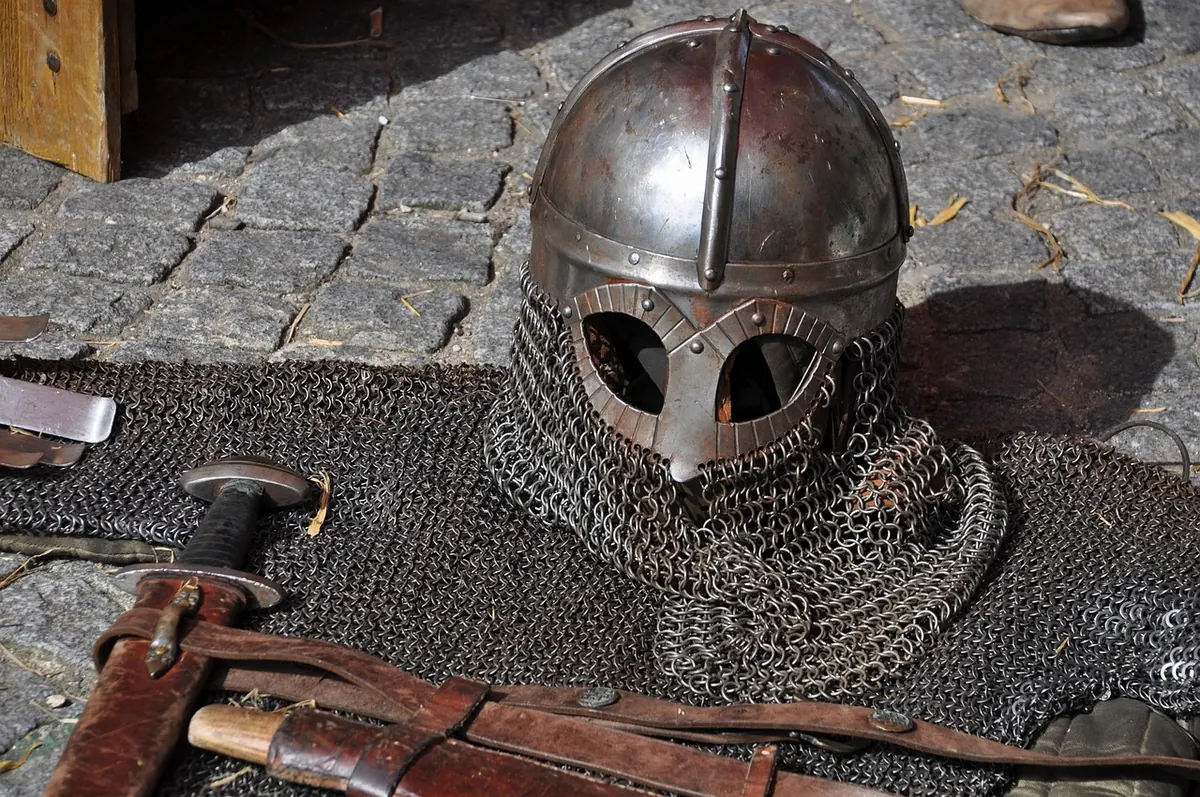
A practical packing checklist for medieval music festivals, covering instruments, repair kits, layered clothing,...
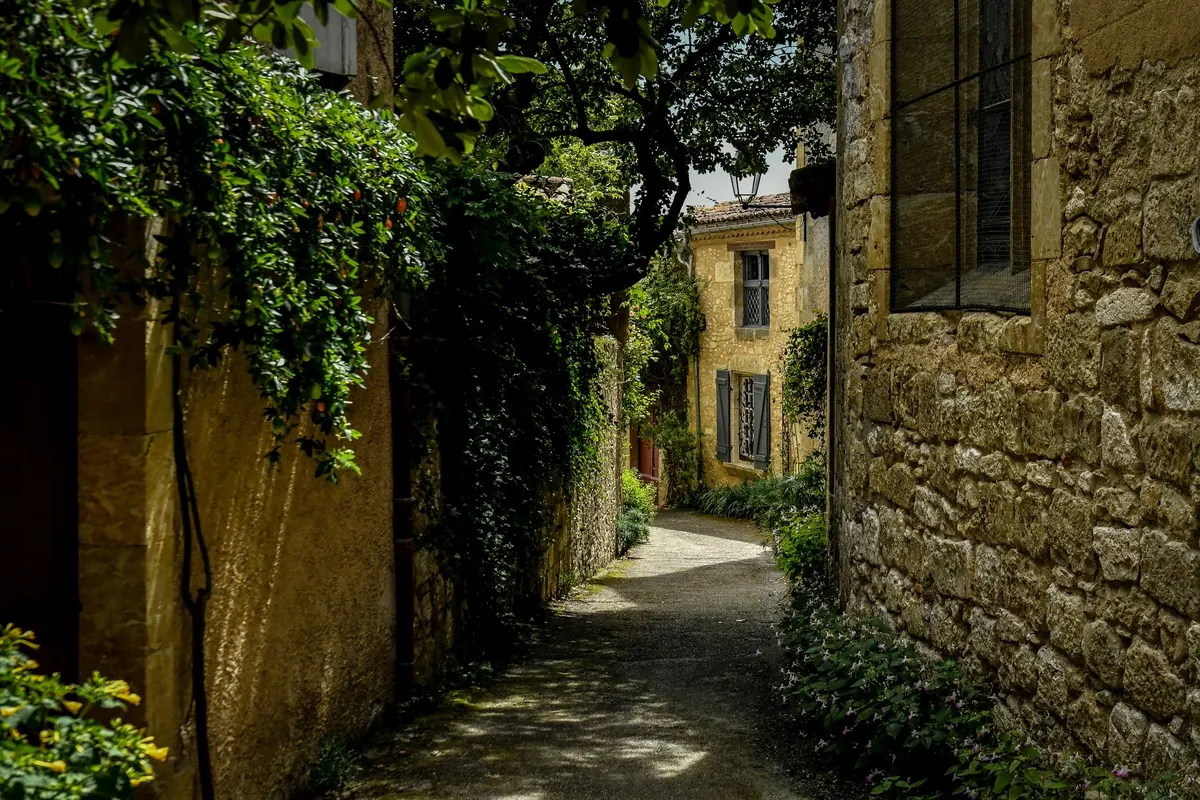
Seven towns and ruins in southern France where troubadour history actually happened, from Ventadour's castle to...

The spring opening was the troubadours' signature move: birds, leaves and May weather set the stage before the poet...

Daily songs and stories from a troubadour.
